





Thoroughbred Breeders Queensland Association
The purpose of the Thoroughbred Breeders Queensland Association is to promote and advance the interests of the Breeding Industry in Queensland.
DISCOVER
Who are we
Our ten-person committee is part of a network of kindred organisations from each state which, with the National body, Thoroughbred Breeders Australia, represents the interests of thoroughbred breeding throughout Australia at a local, federal and international level.
TBQA Breaking News
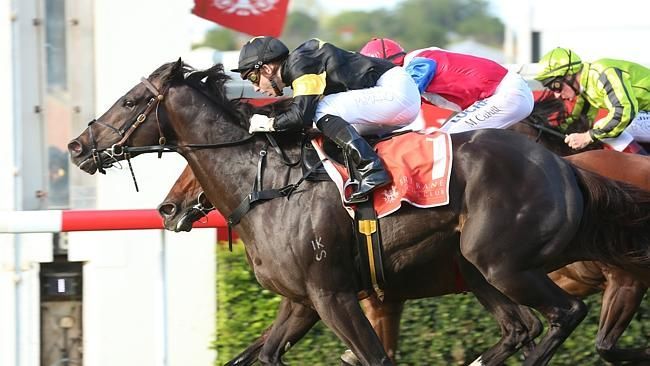
The Queensland Summer Racing Carnival is set to shine again in 2026/27, with all roads leading to the Gold Coast. The glitz and glamour of the Magic Millions will once again headline the Summer Carnival, with this year's carnival featuring 23 black-type races and over $28 million in prizemoney and bonuses in total over nine thrilling weeks of racing. In the lead up to the TAB Magic Millions Raceday, the twilight Magic Millions Gold Raceday on January 9 will feature the third running of the $2.5 million TAB Magic Millions Sunlight 3YO slot race, which has now been granted black-type status and will be run as a Listed race in 2027. The $1 million Racing Queensland Magic Millions QTIS race will also retain its spot on the Summer Carnival’s penultimate meeting, resulting in over $6 million prizemoney for the card. The TAB Gold Coast Magic Millions Raceday on January 16 will again serve as the Summer Carnival’s crowning jewel, headlined by the $3 million TAB Magic Millions 2YO Classic and $3 million Magic Millions 3YO Guineas. Minister for Racing Tim Mander said the Queensland Summer Racing Carnival is instrumental in the success of racing in Queensland. “The Crisafulli Government is committed to the long-term viability of Queensland racing, and a first-class event like the Queensland Summer Racing Carnival showcases the strength of racing in our state,” Minister Mander said. “The carnival is once more headlined by the iconic Magic Millions on the Gold Coast, which continues to grow in popularity, providing a major economic boost for the region each year. "We want Queensland to be the major events capital of Australia, and our Summer Carnival will continue to play a huge role in making sure that racing in Queensland contributes to our status as the home of tourism and events." The Mooloolaba Cup at the Sunshine Coast Turf Club on November 21 takes its place as the traditional Summer Carnival opening, with a new set-weights sprint over 1000m named the General Nediym to kick-off the two-year-old pathway to the Magic Millions. The race has been named in honour of the multiple Group 1-winning gelding who took out the Magic Millions 2YO Classic in 1997. Seven days later, the Tattersall's Listed Recognition Stakes and Tattersall’s Classic take centre stage at Doomben – kicking off six weeks of racing at the Brisbane Racing Club. The Group 3 George Moore Stakes will feature some of the state’s top sprinters on December 5, alongside the Listed Phelan Ready for two-year-olds to continue their Magic Millions path. The day will also host the finals for both the Country Cups Challenge and Country Stampede, which continues to give the state’s regional participants the opportunity to compete on a metropolitan raceday for more than $300,000 in prizemoney. On December 12, the Gateway will be open to four-year-olds, with a berth in the $3 million Stradbroke Handicap on offer in 2027. Winning connections of The Gateway will have the option to run their own horse or negotiate to designate their slot to one of the horses nominated, and in the top 40 order of entry, for next year’s time-honoured Stradbroke Handicap. “The Queensland Summer Racing Carnival is one of this state’s great showcases, bringing together world-class racing, vibrant crowds and the unmistakable energy of summer in the Sunshine State,” RQ Acting CEO Lachlan Murray said. “Similar to what we see in the winter, our Summer Carnival has forged a strong reputation of unearthing the next stars of Australian racing – headlined by Yellow Brick’s sublime win in the Magic Millions QTIS before going on to taste success in the Group 3 W.J. Healy Stakes and the $1 million The Archer. “We look forward to welcoming breeders, owners, trainers, syndicators, jockeys and participants from across the country to Queensland for what will be another outstanding Summer Carnival.” The three-year-old staying programme has become a mainstay of the Summer Carnival, with Group 1 champions in recent years including Kovalica and Gypsy Goddess having emerged through the Group 3 Grand Prix Stakes – to be held on December 19. The $300,000 event is positioned three weeks from the TAB Magic Millions The Wave over the same distance on January 9, which is once again open to all Magic Millions Race Series nominated horses aged three and up. The Group 3 Vo Rogue Stakes returns to Eagle Farm to ring in the New Year on January 2, the same day as the newly named Better Than Ready 2YO 1200m handicap which will carry $150,000 in prizemoney - an increase of $45,000. Synonymous for his success as a sire of two-year-olds, the race has been named after Better Than Ready as a testament to his longevity as one of Queensland’s greatest recent breeding success stories. On the Gold Coast, racing under lights will be showcased as part of the Summer Carnival on December 18, which will host a $200,000 edition of Magic Millions The Debut, open to unraced 2YO colts, geldings and fillies. The Summer Carnival will then return in January for the two marquee Magic Millions racedays and $18.8 million in prizemoney and Racing Women’s Bonuses, coinciding with the 2027 Gold Coast Yearling Sale from January 12-17, 2027. “We are excited to invite the thoroughbred world to the Gold Coast this January to experience the magic combination of the most innovative and rewarding race series, alongside the Southern Hemisphere’s largest yearling sale,” Magic Millions Managing Director Barry Bowditch said. “The Queensland Summer Racing Carnival comprises a complementary program of features for all ages and distances, and importantly fosters broad participation and opportunities for returns to participants across all levels. “We want this carnival to be accessible to everyone.” Click here to see the full programme for the 2026/27 Queensland Summer Racing Carnival.
Racing Australia has today announced a time-limited, one-off window for eligible owners to resolve Late Foal Ownership Declaration (FOD) issues and have affected horses’ embargoes lifted. The process, which has a strict series of deadlines, requires owners to first lodge any outstanding Foal Ownership Declaration, then lodge a Late FOD Appeal. If that appeal is denied, the owner will have 30 days to elect to pay a $2,500 fee, after which the AR 287 embargo can be lifted. What you need to do If you have an outstanding Foal Ownership Declaration for a foal born in the 2025 season or earlier: Foal Ownership Declaration: must be lodged by 5.30pm AEST, Friday 9 October 2026 Late FOD Appeal: must be lodged by 5.30pm AEST, Friday 13 November 2026 If an appeal is denied, the owner will then have 30 days to elect to pay the $2,500 fee to have the embargo lifted. Racing Australia has advised that owners whose appeals have already been denied will be contacted directly about the 30-day payment option. YOU MAY HAVE AN OUTSTANDING FOD WITHOUT REALISING IT Racing Australia advises there are currently 102 outstanding Late Foal Ownership Declarations, including declarations relating to horses born in earlier seasons. TBA is also concerned there may be breeders and managing owners who do not yet realise they have missed a Foal Ownership Declaration deadline, and therefore may be unaware that their horse could be facing an embargo. Please do not assume your records are complete. Please do not assume everything is up to date. Check each foal, confirm who is responsible for lodging the declaration, and make sure it has been completed within the required timeframe. Importantly, this also applies to the current foal crop. All Foal Ownership Declaration must be lodged within 30 days of birth. YOUR FOAL. YOUR DECLARATION. YOUR DEADLINE. Need help with your Foal Ownership Declaration? Contact the Australian Stud Book on (02) 8072 1900 or studbook@racingaustralia.horse.
With the 2026 breeding season underway, we wish all breeders the very best for the months ahead and look forward to seeing plenty of healthy foals arriving across the country. As the first foals of the season approach their 30-day Foal Ownership Declaration (FOD) deadline, TBA is reminding breeders that the FOD must be lodged within 30 days of foaling with the Australian Stud Book. Importantly, don’t assume someone else has done it. Your stud, farm manager or agent may assist with paperwork, but even if you have arranged for them to lodge the declaration on your behalf, responsibility remains with the managing breeder/owner. Make sure you confirm that the FOD has been correctly submitted before the deadline. If you are part of the ownership but are not the managing owner, make sure you check that the managing owner has lodged the FOD by the deadline. Late declarations attract a fee and, if lodged more than 60 days late, may result in the foal being embargoed from racing permanently. Our advice is simple: when your foal is born, put the 30-day deadline in your calendar and confirm that the FOD has been successfully lodged by that date. Need help with your Foal Ownership Declaration? Contact the Australian Stud Book on (02) 8072 1900 or studbook@racingaustralia.horse .
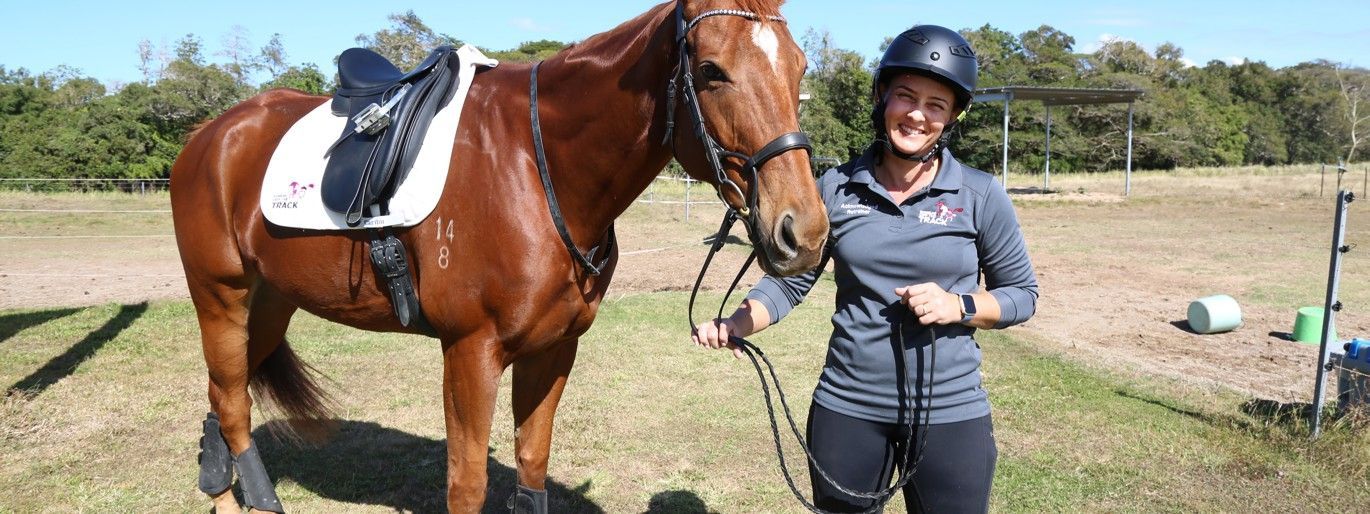
Adrienne Kelley lives over 500 kilometres from the nearest eventing course, while the closest equine specialist vet is more than 120 kilometres away. Her property just outside Ingham was also inundated by flooding at the start of 2025. But rather than be hampered by the long distances and the extreme weather that are part and parcel of living in North Queensland, the Queensland Off-The-Track Acknowledged Retrainer relishes the amount of freedom and space she has to work in. The 35-year-old has been part of the QOTT Acknowledged Retrainers Program since September 2024. Kelley was always destined to go into retaining retired thoroughbreds, having grown up in a family heavily involved in horsemanship. “It runs in the blood - my family has been involved with horses for generations, my granddad was a staunch pony clubber, and my dad followed through with that,” Kelley said. “Granddad used to break in racehorses for a few of the families locally, so I always had an exposure to thoroughbreds. “My first real horse after I finished riding ponies was a thoroughbred that came through him, Blue Mystique was her name - she was very cool, and I fell in love from there with the thoroughbreds. “I grew up within a five-kilometre radius of where we are today, and I bought out the remainder of the family farm with my partner a few years ago. “We built our paddocks, and then we built our house, and we're just constantly evolving the property from there.” Kelley participates in everything from dressage, showjumping, eventing, endurance, sporting, mustering cattle, trail riding, the occasional bout of horseback archery or working equitation, as well as riding as clerk-of-the-course for the Herbert River Jockey Club. She has taken a number of off-the-track thoroughbreds from the track through to top 10 placings at Pony Club Queensland State Championship level. Her first galloper as part of the QOTT Program was No One There, a former racehorse trained by John Manzelmann who has since gone on to a career in pony club. Retired gallopers from the Janel Ryan and Georgie Holt stables have also graced the property in the last few years. Kelley is one of only three QOTT Acknowledged Retrainers north of Townsville, alongside Jenna Arnett and Rebecca Henry. While the remoteness of her location can prove challenging, Kelley said it was important to provide suitable options for retired racehorses in the region. “It's often a little bit tough doing anything with horses in regional North Queensland - I'm an eventer at heart, and we're about 500 kilometres from our nearest eventing course,” Kelley said. “Our local pony club has a cross-country course, and we unfortunately got flooded quite badly last year, and we're very slowly regaining that ground and equipment, but to compete, we've got to travel over 500 kilometres. “We're 120 kilometres from our nearest specialist vet, and we've got an equine chiropractor, but we don’t have any other remedial therapy providers locally. “But one good thing about living regionally is that there's plenty of space, and I'm always happy to help out our local trainers who don't want to put their horses on a truck to the Brisbane area to find a retraining opportunity.” Kelley’s resilience was put to the test at the start of last year when a one-in-100-year rain event wreaked havoc on the region. Her property at Braemeadows was inundated, with over 600 millimetres of rainfall falling in 24 hours around the area. It led to some nervous moments for Kelley and partner Levi as they worked to keep their horses safe. “It certainly wasn't advertised to get as serious as quickly as it did, and we were caught a little off guard,” Kelley recalls. “We did find ourselves moving horses through waist-deep water to get them out and onto dry ground. “Luckily, the roads are fairly high so we could get out there and walk them down to our wonderful neighbours who had a sandlot out of water, which was much appreciated by all of us. “We did lose a little bit of gear, we had water go through our shed, a bit of tack was lost and a fair bit of feed got wet and mouldy. “But the North Queensland spirit is strong, the community came together, and our horse community locally was really well supported by the crew north and south of us, and Cairns and Townsville really came together to help us out.” Kelley currently has seven horses on her property, with retired galloper King Canute progressing through the QOTT retraining program. The bay gelding had 21 starts over his career in the care of FNQ trainers Trevor and Peter Rowe, Scott Cooper and Renee Schluenz. The thoroughbred is likely to head into the discipline of eventing in Mackay for his new life post-racing, with Kelley committed to seeing King Canute thrive in retirement. “I have always been an advocate for thoroughbreds, particularly in the pony club world,” Kelley said. “I don't think you can find a horse that's more capable and affordable, and just all-round pony club appropriate, so long as they've had a good foundation. “I spend a lot of time on the basics and the foundations, and I don't get out very much in the competition world with my off-the-track horses. “My greatest achievement is producing good horses that are capable of going on to any home, and I know that they're not going to cause problems or upset or misbehave as much as I can guarantee, having put them through their paces in a range of circumstances.” Kelley could not speak higher of the QOTT Program for providing support to retrainers as they prepare retired racehorses for their new careers. “I think it's fantastic - it makes it doable to do the diagnostics, to do the rehab that needs to be done,” Kelley said. “A set of rehab shoes are not cheap, and in the normal day-to-day, that's not what I would consistently be able to afford for one of my horses. “But with the support of the QOTT Program, I know I can pour the money into getting to the answers and hopefully the best outcomes possible for the horses without having to stress and eat noodles for a month. “I also appreciate the access to the lessons and then being able to on sell that to my clients and to the people who are purchasing my off-the-track horses. “Knowing I send them off with all of the information they need to join the QOTT Program initiatives, stay involved in the QOTT Program, and continue that contact with Racing Queensland and its Approved Coaches and Acknowledged Retrainers is fantastic.” Click here for more information on the QOTT Acknowledged Retrainers Program.
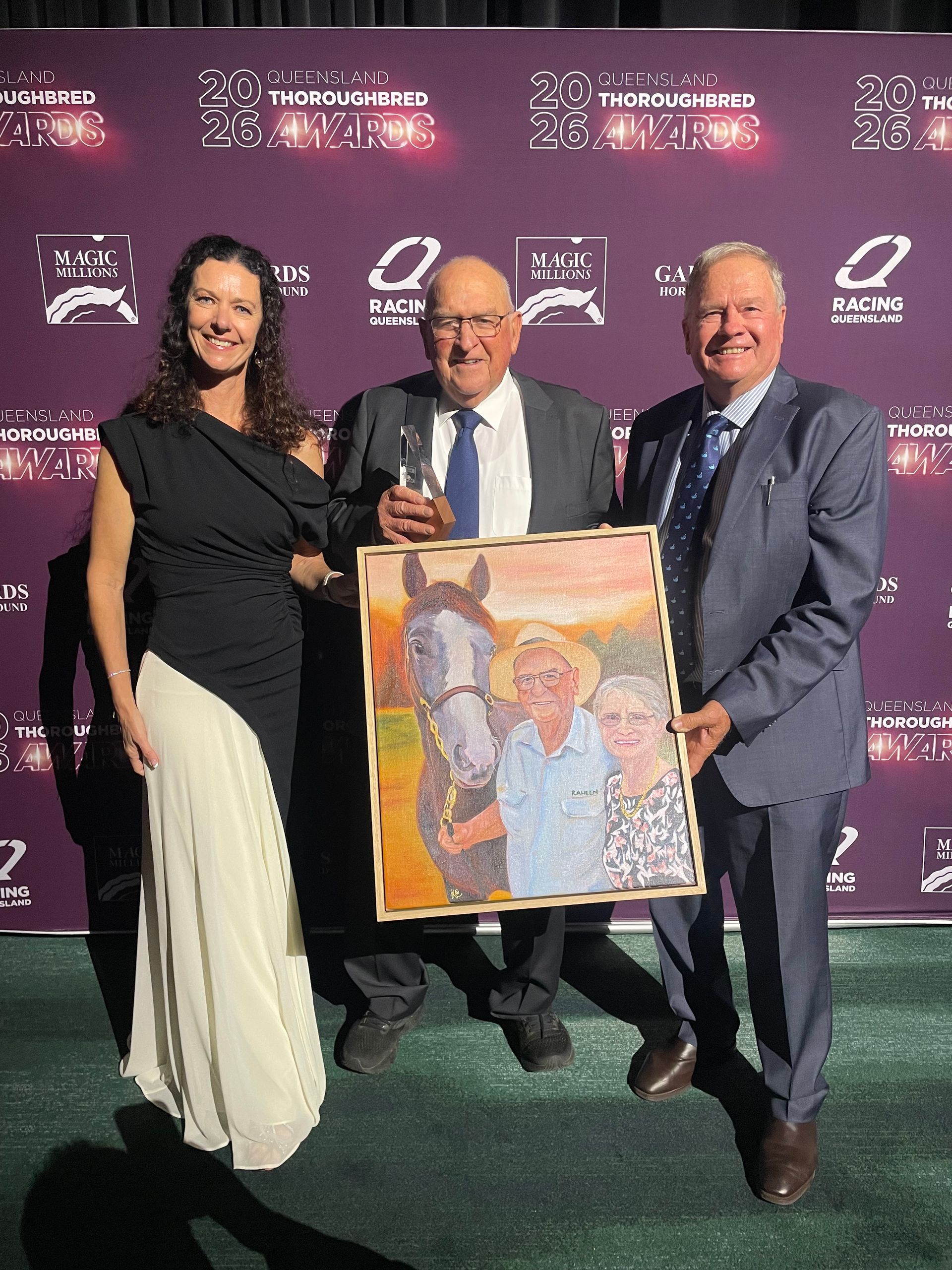
Internationally renowned thoroughbred breeder, Basil Nolan, manager of Raheen Stud at Goomburra near Warwick has been inducted into the Queensland Hall of Fame. The honour came at yesterday’s Racing Queensland Thoroughbred Awards at The Star, Brisbane before 2,500 racing industry participants. The TBQA presented Basil and Di with an original portrait painting commissioned by Toowoomba-based artist, Kelly Charles. For more than six decades, Basil has played a significant role in shaping the racing and breeding industry, with his influence extending from his family’s Raheen Stud near Warwick to state and national industry boards, government and wagering. Basil grew up in racing and breeding, with his parents establishing Raheen Stud in 1957 near Warwick. Under Basil’s leadership, Raheen has grown into one of Queensland’s most respected thoroughbred nurseries, while remaining a proudly family-run operation. His contribution to the industry began at an early age, when he was first elected to the Thoroughbred Breeders Queensland Association committee in 1969 at just 22 years of age. He went on to serve as TBQA President from 1980 to 1991, before returning to the role in 2010 - a testament to the trust and respect he has earned throughout the industry. One of Basil’s defining strengths has been his ability to advocate effectively at government level. Through decades of consultation with ministers, senior government officials and key industry representatives, he has played a central role in delivering lasting reforms and initiatives, including: Strengthened QTIS and Breeders Bonus schemes Protection of the QTIS Sale Improved promotion of Queensland-bred horses Vital animal welfare and racehorse rehoming initiatives Securing government funding for Hendra Virus research and the subsequent rollout of the Hendra vaccine Retaining the Group 1 status of the Queensland Oaks Implementing emergency assistance programs for breeders during devastating flood and drought events At a national level, Basil has been a Queensland representative on the board of Thoroughbred Breeders Australia since its inception in 2005 and served as its President from 2014 until May this year. His national representation ensured Queensland had a strong and respected voice within the Australian thoroughbred industry, with Basil contributing to initiatives including: Improved marketing and promotion of Australian thoroughbreds through Aushorse Expanding black-type racing opportunities for Queensland Supporting the introduction of micro-chipping and DNA identification Helping establish a thriving international export market for Australian thoroughbreds Adding to Basil’s rare breadth of industry experience is his 22-year career as a bookmaker at Eagle Farm. His firsthand knowledge of wagering proved invaluable during discussions around race-fields legislation and ultimately helped support changes that delivered a wider distribution of prizemoney across Queensland. While Basil’s achievements span governance, breeding, racing, wagering and advocacy, his motivation has always been straightforward - a belief that a strong and healthy industry benefits everyone. His passion extends beyond his own family and business to breeders, owners, trainers and participants across Queensland, and to ensuring the industry remains sustainable for future generations. Reflecting on his induction, Basil said he was both surprised and humbled by the recognition. “It’s an incredible honour and one I truly never expected,” Basil said. “I’ve been very fortunate to spend my life in an industry that I love, and to have had the opportunity to represent Queensland breeders and work for the betterment of racing and breeding. “But this honour is not just about me. It is recognition of the thousands of breeders, owners, trainers and industry participants who make up our industry, and I’m very proud to accept it on their behalf. “I also couldn’t have done any of it without the support of my wife Diane and my family, who have been my backbone throughout the years.” TBQA Executive Officer Stacey Silver said Basil’s induction was a fitting recognition of an extraordinary contribution to Queensland racing and breeding. “Basil’s contribution to our industry is difficult to put into words because it has been so broad and has spanned more than six decades,” Ms Silver said. “He has been a breeder, owner, bookmaker, advocate, leader and, most importantly, a passionate voice for Queensland breeders. “Basil has never been afraid to stand up for what he believes is right for the industry, whether that has meant dealing with government, negotiating with industry bodies or fighting to protect opportunities for Queensland breeders. “His knowledge, determination and willingness to put in the hard yards have delivered real and lasting benefits for our industry. “For the TBQA and our members, Basil’s induction is something we are incredibly proud of. It is wonderful to see his decades of commitment, leadership and service recognised in this way.” Basil Nolan’s induction into the Queensland Racing Hall of Fame recognises more than six decades of leadership, advocacy and unwavering commitment to Queensland racing and breeding. It is recognition of a career dedicated to strengthening the industry he has been part of for virtually his entire life, and a contribution that has left a lasting mark on the Queensland racing community.
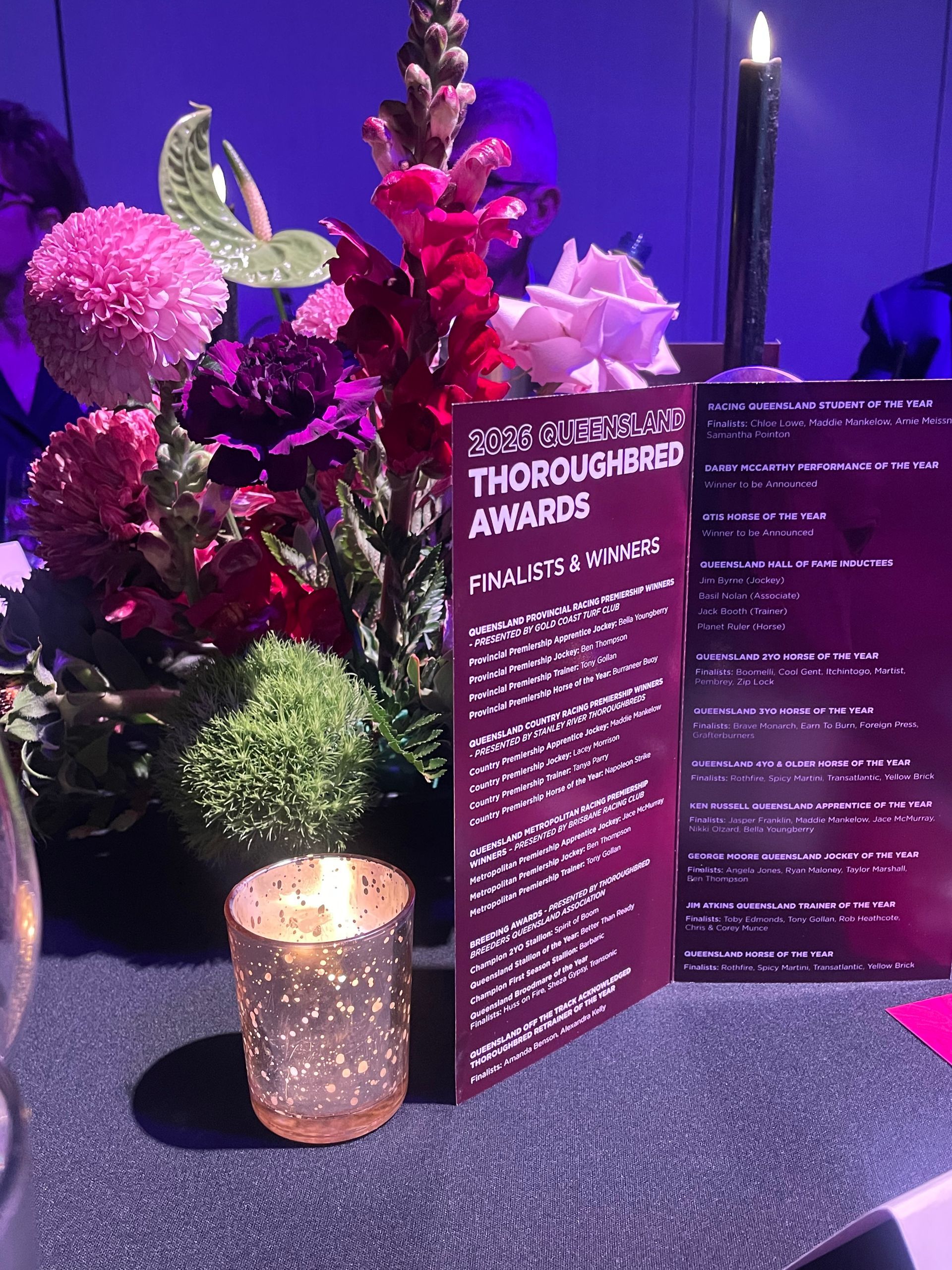
SHEZA GYPSY Top Performer: Sheza Alibi (m. 2021 – by Saxon Warrior). 10 starts. 7-2-1. A$3,719,945. Sheza Gypsy has been crowned Queensland Broodmare of the Year following the extraordinary season enjoyed by her outstanding daughter, Sheza Alibi. The four-year-old mare emerged as one of Australia's elite performers during the 2025–26 racing season, capturing two Group 1 victories in the Randwick Guineas and Doncaster Handicap, together with Group 2 successes in the Armanasco Stakes and Sandown Guineas, and the Group 3 Vanity Stakes. Bred in Queensland by long-time hobby breeders Fred and Desley Monsour, Sheza Alibi completed the season with seven wins, two seconds and a third from just 10 starts, amassing A$3,719,945 in prizemoney. Her remarkable rise began after being purchased by Queensland cattle breeder Fred Noffke for just A$10,000 through the Inglis Digital June (Early) Online Sale as a weanling. She was initially entrusted to Toowoomba trainer Matt Kropp before beginning her racing career with Rockhampton trainer Kris Hansen, whose patient handling laid the foundation for her progression to the Peter Moody and Katherine Coleman stable. The success of Sheza Alibi is a testament to the breeding program developed by Fred and Desley Monsour over several decades. A true Queensland story, both Sheza Gypsy and her star daughter were bred by the Monsours, whose patience and dedication have been rewarded with one of the state's most memorable breeding achievements. Adding another Queensland chapter to the story, Sheza Gypsy was purchased last year by Queensland breeders Cameron and Kellie Bond, ensuring the Broodmare of the Year remains in the hands of local breeders. Sheza Gypsy's Broodmare of the Year title is fitting recognition of the influence she has already had on Queensland breeding, with Sheza Alibi's outstanding achievements ensuring her place among the state's most accomplished producers.